My Fragrance Layering Journey to a Signature Scent
It was a crisp morning in early 2026 when I realized I was tired of smelling like everyone else. My once-cherished jasmine perfume had become the olfactory wallpaper of every coffee shop I visited. Desperate for something that felt truly me, I stumbled into the world of fragrance layering—a realm where creativity meets chemistry, and where individuality reigns supreme. What started as a timid experiment has now become my daily ritual, a way to speak without saying a word.
My first step was understanding that layering isn't just about spraying two perfumes on top of each other. It begins right after the shower, with a scented body lotion still damp on my skin. I learned from experts like Laurice Rahme and Pia Long that the canvas matters. Dry skin repels fragrance, while hydrated skin clings to every molecule. So now, I start with a creamy, vanilla-infused body butter, letting it soak in before I even reach for a bottle. This base note of moisture is my secret weapon for longevity.
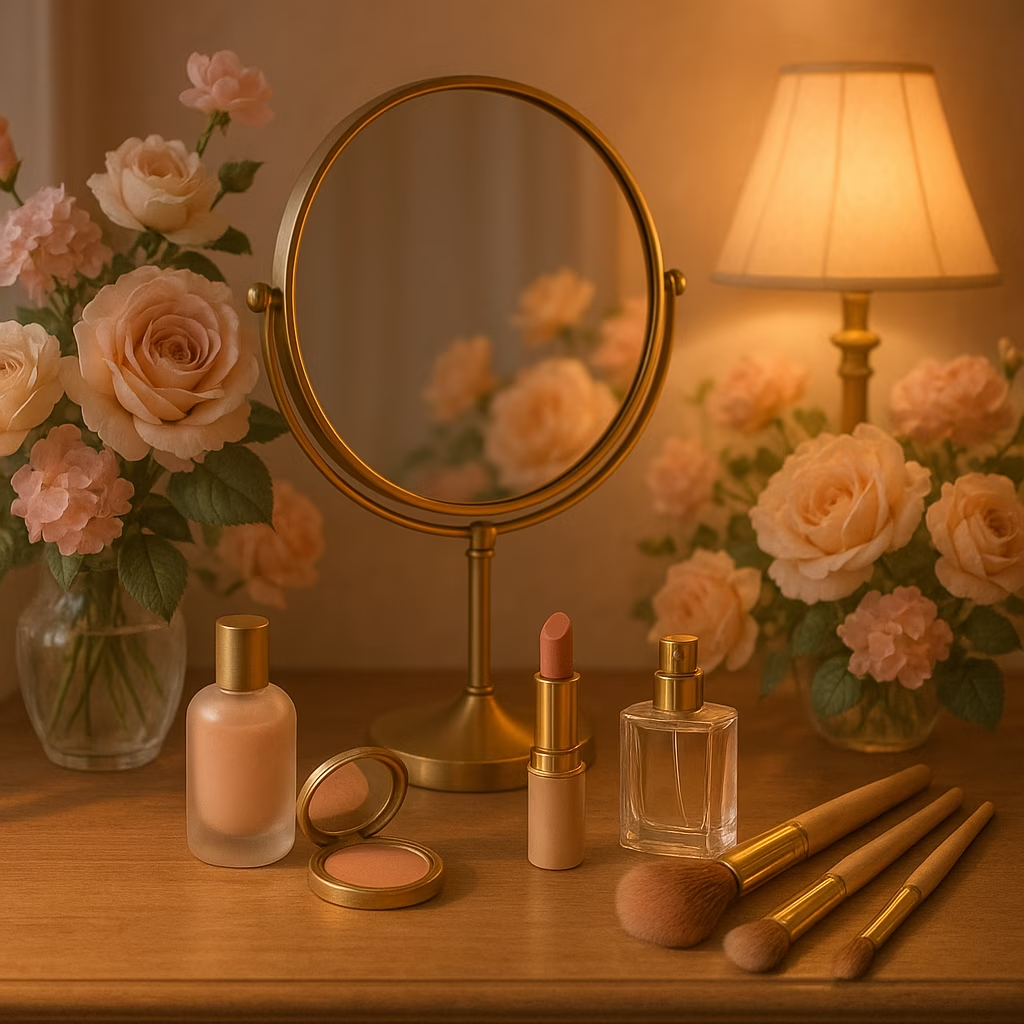
But let me rewind. Why bother layering at all? For me, it was about personalization. As Rahme once explained, custom scents capture the personality of an individual. I didn't want a mood ring on my finger; I wanted one for my nose. Layering gives me the power to craft an aroma that reflects my mood—bright and citrusy for a morning meeting, warm and resinous for a date night. It's like composing music with invisible instruments.
Longevity was the other revelation. A single spritz of my old perfume vanished by lunch. But when I layered a sandalwood oil underneath that same citrus fragrance, it clung to my skin until evening. The trick is using different formulas: a lotion as the foundation, an oil for depth, and an alcohol-based perfume on top. The oil slows down the evaporation of the alcohol, letting the heart and base notes unfold gradually. My current layering ritual has turned me into a human diffuser—in the best way possible.
Now, let's talk about how I actually build my bespoke blend. I always keep the fragrance pyramid in mind: top notes (the sparkling first impression), middle notes (the heart), and base notes (the lingering soul). I start by choosing a simple, unfussy base—often a single-note musk or vanilla. On top of that, I add something with more complexity, like a rose-patchouli blend. Long's advice rings in my ears: "The easiest is to find a fairly unfussy fragrance that is already built around musk or typical base notes... then add something with more complexity on top." The result is a pleasing remix that feels intentional rather than chaotic.
I also love using single-note perfumes as anchors. For instance, my favorite citrus cologne fades fast on its own, but when I layer it over a cedarwood oil, it gains backbone. The woody base cradles the zesty top notes, making them dance longer. It’s like giving a fleeting melody a steady bassline.
Experimentation is key, and I've had plenty of fun—and a few mishaps. One rule I follow religiously: avoid combining two dark, complex perfumes. I once mixed a heavy oud with a smoky leather accord, and the result was a cloying cloud that made me smell like a haunted antique shop. Lesson learned. Long warned that highly complex perfumes often share components, leading to jarring clashes. Now, I stick to blending a maximum of three scents: two if they're both complex, three if I'm using single-note varieties. My favorite trio at the moment is bergamot, rose, and vanilla—a classic combination Rahme mentioned that feels both timeless and fresh.
Tips I wish I'd known earlier:
-
🧴 Start with creamy consistencies as a base (lotion or butter).
-
🪔 Next, apply a pure oil or oil-based fragrance.
-
💨 Finish with an alcohol-based perfume.
-
⏳ Heavier scents go on first so they don't overpower lighter ones.
-
🧪 Common-note pairings are safe bets—jasmine with jasmine-related florals, or a vanilla thread tying two perfumes together.
One memorable afternoon, I created a scent that earned me three compliments at a gallery opening. I had spritzed a herbaceous rosemary & citrus cologne on my damp wrists, then dabbed a tiny bit of labdanum resin oil on my collarbones. The green sharpness collided with the leathery amber, producing an aura that felt both intellectual and warm. It was my signature in that moment—a scent that told the story of who I was that day.
Patience is paramount. Rahme's poetic advice stays with me: allow as much time as it takes for your scent to "speak the language" you envisioned. I've learned to let each layer settle before judging the outcome. A combination that seems discordant at first might bloom into something sublime after 20 minutes. It's a slow art, one that rewards curiosity.
By 2026 standards, fragrance layering has evolved beyond a trend—it's a personal statement. With the rise of indie perfume houses and single-note collections, it's easier than ever to build a custom wardrobe of scents. I've swapped my dozen unused bottles for a curated arsenal of bases, heart notes, and accents. My bathroom shelf looks like a perfumer's organ, and every morning feels like a creative act.
If you're still chasing that elusive signature scent, stop searching for a single bottle. Start playing with layers. Your perfect perfume doesn't exist in a lab; it exists at the intersection of your instincts and the notes that resonate with your soul. Dip into musk, dance with rose, and anchor yourself in amber. The only mistake is not trying.
Comments